
Dr. Lucy Anning
Centre for Africa-China Studies,
University of Johannesburg,
South Africa.
Lucyanning091@gmail.com
Introduction
Ghana stands at a crossroads, investing $1,200 annually into sustaining each prisoner while grappling with soaring youth unemployment and a staggering $2.5 billion food import bill. Yet, buried within its prison walls lies an untapped economic force. Burkina Faso’s Captain Traoré model has turned incarceration into innovation, transforming prisons into engines of agricultural productivity. Why should Ghana’s prisons remain financial sinkholes when they could drive food security, skill development, and economic revitalization? This article explores how recontextualized prison labor, thus shifting from mere confinement to cultivation, could be the bold, pragmatic solution Ghana needs to break free from economic stagnation.
Ghana’s Carceral Crisis and Agricultural Potential

Ghana’s prisons are bursting at the seams, housing 14,000 inmates, most convicted of minor, nonviolent offenses, yet yielding no economic value. Overcrowded cells breed disease, malnutrition persists, and rehabilitation remains a mirage. With $45 million drained annually into a system that traps 72% of ex-inmates in joblessness, the cycle of crime and re-incarceration tightens.
Paradoxically, Ghana’s vast farmlands remain idle, while the nation imports $300 million worth of rice each year. Burkina Faso’s bold prison reforms flipped this script, turning inmates into agricultural producers, slashing costs, and driving self-sufficiency. Could Ghana unravel its prison yards to cultivate prosperity instead of perpetuating stagnation? The answer lies in redefining incarceration as an engine of economic renewal.
Envisioning the Traoré Model as a Pathway to Ghana’s Agricultural Revival

Imagine Ghana’s prison yards transformed into thriving farmlands, where idle hands cultivate prosperity instead of stagnation. Reviving the once-flourishing Asutuare Rice Project with inmate labour could yield 25,000 metric tons of rice annually, slashing costly imports. Beyond agriculture, prison workshops could pivot from mere uniform production to crafting kente and African prints, tapping into a $4.3 billion market. Value-added cashew processing could further unlock $50 million in export premiums. With the right vision, Ghana’s prisons could shift from a burden to the backbone of economic renewal.
The Asutuare Rice Project Revival as a Case Study
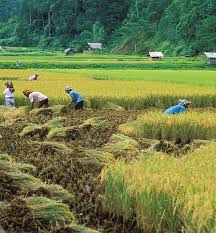
Once a pillar of Ghana’s food security, the Asutuare Rice Project now stands in ruins with its irrigation canals choked with silt and its machinery rusting in silence. Yet, within this decay lies immense potential. Revitalizing Asutuare with prison labor could yield 25,000 metric tons of rice annually, slashing imports and injecting $15 million into the economy. Beyond rice, the project could generate seasonal jobs while equipping inmates with agronomic skills to rejuvenate a sector struggling with an aging workforce. Ghana’s forgotten farmlands could flourish again if vision replaces neglect.
Economic Projections and Ethical Frameworks
Ghana’s prisons hold the potential of shifting from economic drains to engines of prosperity. Engaging 4,000 nonviolent inmates in farming 50,000 acres could inject $48 million annually into agriculture, while equipping prison workshops with looms could add $22 million in textile exports. Value-added cashew processing alone could yield $25 million, pushing total contributions to $95 million, thereby transforming incarceration into economic empowerment. However, ethical safeguards must guide this transition. Adhering to International Labour Organization (ILO) standards, ensuring fair wages, and certifying vocational skills would prevent exploitation. With oversight from civic bodies and NGOs, Ghana could balance economic revival with restorative justice, fostering dignity alongside development.
Potential Challenges and Strategic Mitigations
Skeptics may liken prison labor to colonial exploitation, but reframing it as “national service” could shift perceptions. A Farm for the Nation campaign could rally public support by highlighting its role in food security. The $120 million startup cost, though daunting, could be eased through public-private partnerships. For instance, Blue Skies Holdings has pledged $3 million for irrigation in exchange for produce. In a bid to minimize security risks, only nonviolent inmates with short sentences would qualify, ensuring rehabilitation, not recidivism.
Conclusion
Ghana stands at a defining moment: cling to a punitive system deepening poverty or harnessing prison labor as a catalyst for economic renewal. The Captain Traoré Prison model offers a bold alternative, merging penal reform with agricultural and industrial revival. Beyond reducing recidivism, it could slash food imports, empower inmates with skills, and inject millions into national development. In a country battling youth unemployment and soaring inflation, this is more than just a reform but a reinvention. From prison yards to farmlands, Ghana’s future could be cultivated from within.


